TREATMENT AREAS
Spine
Modern treatment options for back and spinal pain
Back pain is among the most common health problems and may significantly limit everyday life. Depending on their diagnosis, patients at EIRM-certified clinics may have access to precise diagnosis, targeted interventional treatment, selected regenerative medicine methods and modern rehabilitation.
Care at certified clinics aims to identify the actual source of pain and propose an individual treatment plan that may help relieve symptoms and improve mobility.
The European & Scandinavian Institute of Regenerative Medicine (EIRM) is a professional and certification institution overseeing a network of certified clinics. EIRM itself does not provide healthcare; examinations and treatment are delivered by individual certified clinics as independent healthcare providers.

01 – Why does the spine hurt?
The most common causes of spinal pain
Spinal pain may have several causes. It does not always originate directly in an intervertebral disc, and different conditions require different treatment approaches.
Intervertebral discs
degenerative changes, disc protrusions and herniations.
Facet joints
pain related to the small joints between vertebrae.
Nerve roots
nerve irritation or compression, potentially with radiating pain.
Sacroiliac (SI) joints
pain in the lower back and buttock area.
Muscles, ligaments and tendon attachments
overload and impaired soft tissue function.
Chronic and postoperative pain
persistent or recurrent symptoms after previous treatment.
02 – Precise diagnosis
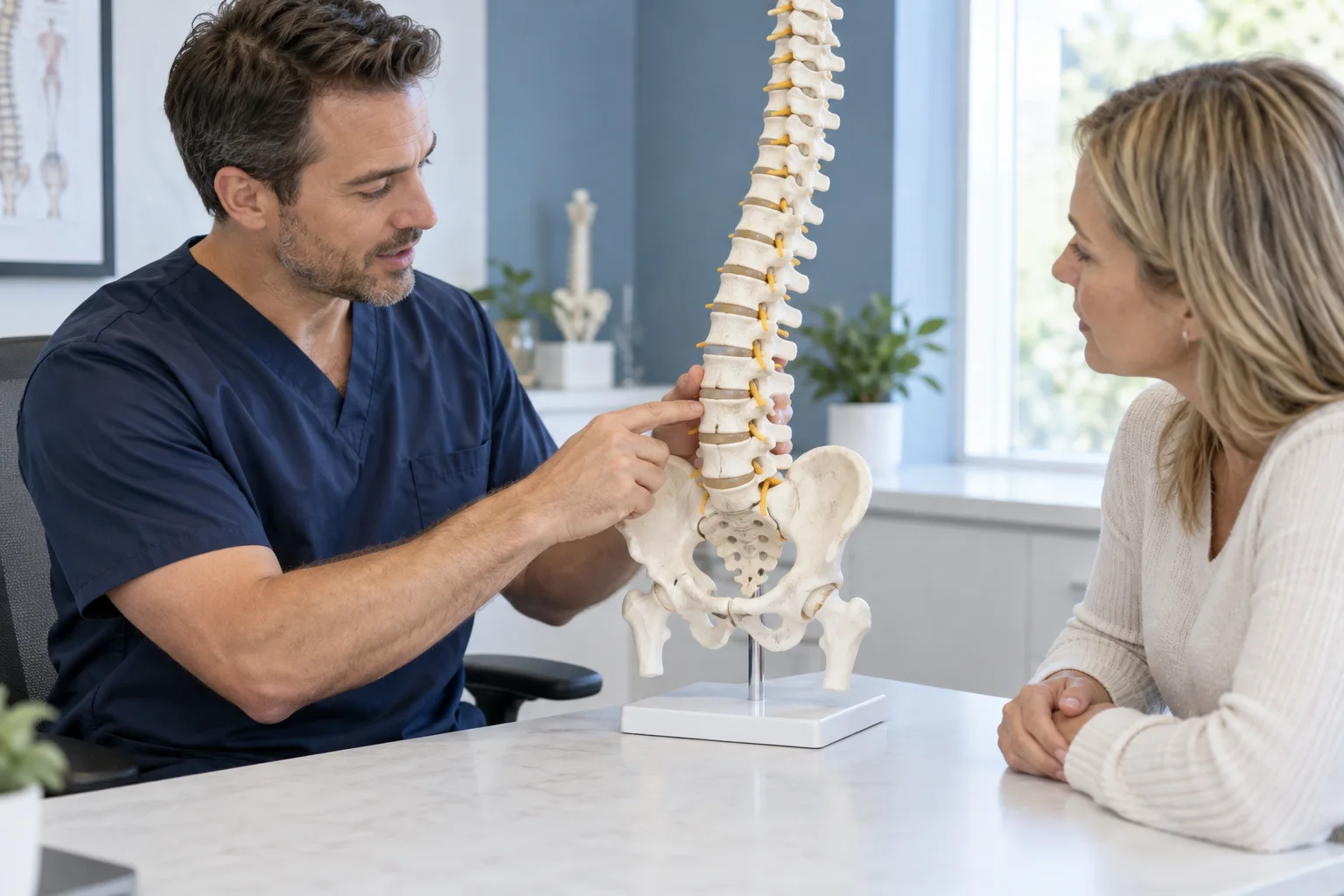
We identify the actual source of pain
An accurate diagnosis is the foundation of appropriately selected spinal pain treatment. Doctors at certified clinics use clinical and neurological examinations, available imaging findings and diagnostic blocks where indicated.
Clinical examination
Neurological examination
Magnetic resonance imaging (MRI)
X-ray and CT where indicated
Diagnostic blocks
03 – Modern treatment options
Individual treatment according to the cause of pain
Depending on their expertise and available equipment, EIRM-certified clinics may offer interventional procedures and selected regenerative or supportive therapies. The choice of treatment always depends on the diagnosis, extent of the condition, the patient's health and the treating doctor's assessment.
BMAC – bone marrow concentrate (main regenerative therapy)
PRP – autologous plasma
Targeted interventional procedures
Radiofrequency treatment
Endoscopic procedures
Supportive injection therapies
Physiotherapy and rehabilitation
FEATURED THERAPY – BMAC
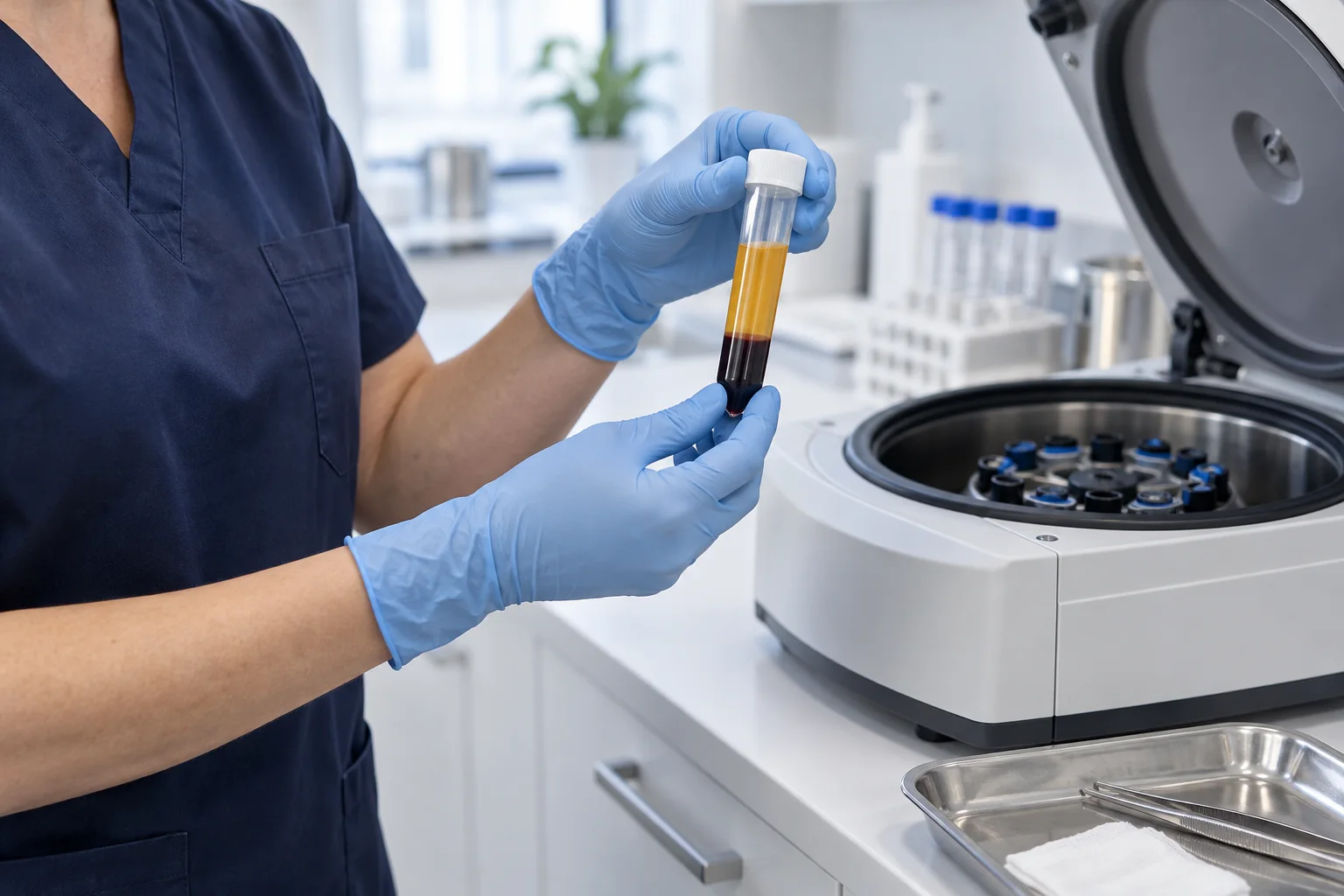
BMAC – concentrate from the patient's bone marrow
BMAC is a method of autologous biological treatment. The concentrate prepared from the patient's own bone marrow contains cellular and biologically active components that are being studied in regenerative medicine.
For selected spinal conditions, a doctor at a certified clinic may consider BMAC individually if it is available at that clinic and appropriate according to current knowledge and applicable rules. Clinical effectiveness varies by diagnosis and cannot be guaranteed in advance. BMAC has not been shown to reliably restore damaged intervertebral discs.
04 – Precise image-guided treatment
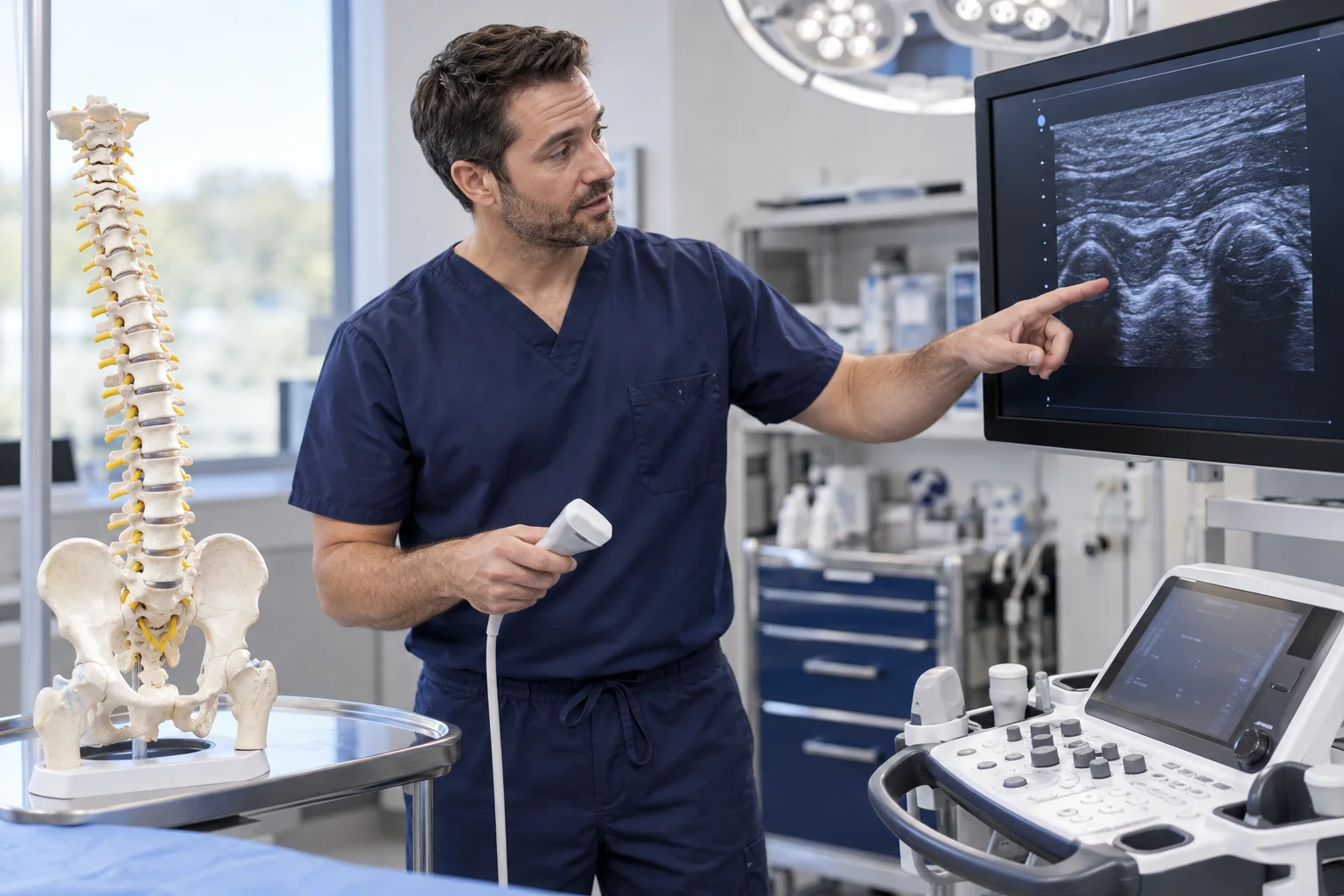
Precision is the foundation of targeted therapy
For selected procedures, doctors at certified clinics may use ultrasound or X-ray guidance to help monitor instrument positioning and target the treatment area. It is important both to choose an appropriate therapy and to identify the structure responsible for pain correctly.
05 – Rehabilitation and a combined approach
More than a single procedure
Treating chronic spinal pain often requires a combination of procedures. Active patient participation and a gradual return to everyday activities are important.
Individual physiotherapy
Neurostimulation rehabilitation
Strengthening the stabilising system
Adjusting movement habits and returning to activities
06 – What can you expect?
The aim is less pain and better mobility
Depending on the cause of symptoms, treatment may aim to relieve pain, improve spinal function, reduce movement limitations and improve quality of life. Results are individual and depend on the diagnosis, extent of the condition and overall health.
Pain relief
Improved spinal function
Better quality of life
Reduced reliance on medication, if health allows
07 – Frequently asked questions (FAQ)
What should you know about spinal treatment?
Here you will find answers to common questions about spinal pain treatment options. During a consultation, a doctor at your chosen certified clinic will explain which examinations and procedures are suitable for you.
01 Can chronic spinal pain be treated without surgery?
Yes, non-surgical treatment is the first choice for many causes of chronic spinal pain. It includes physiotherapy, appropriate movement, medication and interventional procedures where indicated. Surgery is necessary for some serious neurological conditions or when conservative treatment provides insufficient benefit.
02 What is BMAC and for which spinal conditions is it considered?
BMAC is a concentrate prepared from the patient's own bone marrow. It contains cellular and biologically active components. Its use in selected spinal conditions is the subject of clinical research; it is not a universal or standard treatment for all back pain. A doctor must assess suitability individually.
03 Can BMAC restore a damaged intervertebral disc?
At present, it cannot reliably be claimed that BMAC injection restores a damaged intervertebral disc or reverses degenerative changes. Clinical evidence is limited, and study results cannot automatically be applied to every patient.
04 What is the difference between BMAC, PRP and interventional treatment?
BMAC is bone marrow concentrate, and PRP is platelet-rich plasma obtained from the patient's blood. Interventional treatment includes targeted diagnostic or therapeutic procedures, such as blocks and radiofrequency treatment. The procedures have different indications, mechanisms and levels of clinical evidence.
05 Is regenerative treatment suitable for a herniated disc?
Not automatically. For a herniated disc, clinical findings, neurological symptoms and MRI results are particularly important. Some patients benefit from conservative or interventional treatment; others need a surgical assessment. Regenerative procedures cannot be considered a proven replacement for standard treatment of a herniation.
06 How do I find out where my back pain comes from?
A doctor assesses the nature of the pain, neurological symptoms, clinical examination and available imaging findings. Additional examinations or diagnostic blocks may be recommended where needed. An MRI finding alone may not always explain the cause of pain.
07 Are image-guided spinal procedures safe?
Ultrasound or X-ray guidance helps the doctor monitor instrument positioning and target the procedure. However, it does not eliminate the risk of complications. Depending on the procedure, these may include bleeding, infection, temporary worsening of pain or damage to nerve structures. The doctor discusses the specific benefits and risks with the patient.
08 How long does recovery take and when can improvement be expected?
This depends on the diagnosis and type of procedure. After some outpatient procedures, a return to everyday activities is relatively quick; others require a longer recovery regimen and rehabilitation. The onset and duration of the effect vary and cannot be guaranteed.
09 Is physiotherapy needed after treatment?
In many cases, yes. Individually guided physiotherapy and an appropriate movement regimen may help improve spinal function, muscle control and pain management. A doctor or physiotherapist determines the timing and extent of rehabilitation according to the diagnosis and procedure performed.

Are you troubled by back or spinal pain?
Find out which examination and treatment options may be considered for your symptoms. Choose an EIRM-certified clinic, where a doctor will assess your health and propose an individual approach where needed.