
TREATMENT AREAS
Knee
Modern treatment options for knee pain and osteoarthritis
Depending on their diagnosis, patients at EIRM-certified clinics may have access to precise diagnosis, interventional procedures, selected regenerative and supportive injection therapies, and rehabilitation. Individually selected care aims to relieve pain and support a return to movement.
The European & Scandinavian Institute of Regenerative Medicine (EIRM) is a professional and certification institution overseeing a network of certified clinics. EIRM itself does not provide healthcare; examinations and treatment are provided by individual certified clinics.

01 – WHY DOES THE KNEE HURT?
The most common causes of knee pain
The knee is a complex joint exposed to substantial loads during walking, sport and everyday activities. Pain may have different origins and often involves a combination of factors.
Osteoarthritis (degenerative changes)
Cartilage damage
Meniscus injuries and damage
Inflammatory joint conditions
Overload, tendon attachments and tendons
Other causes of pain
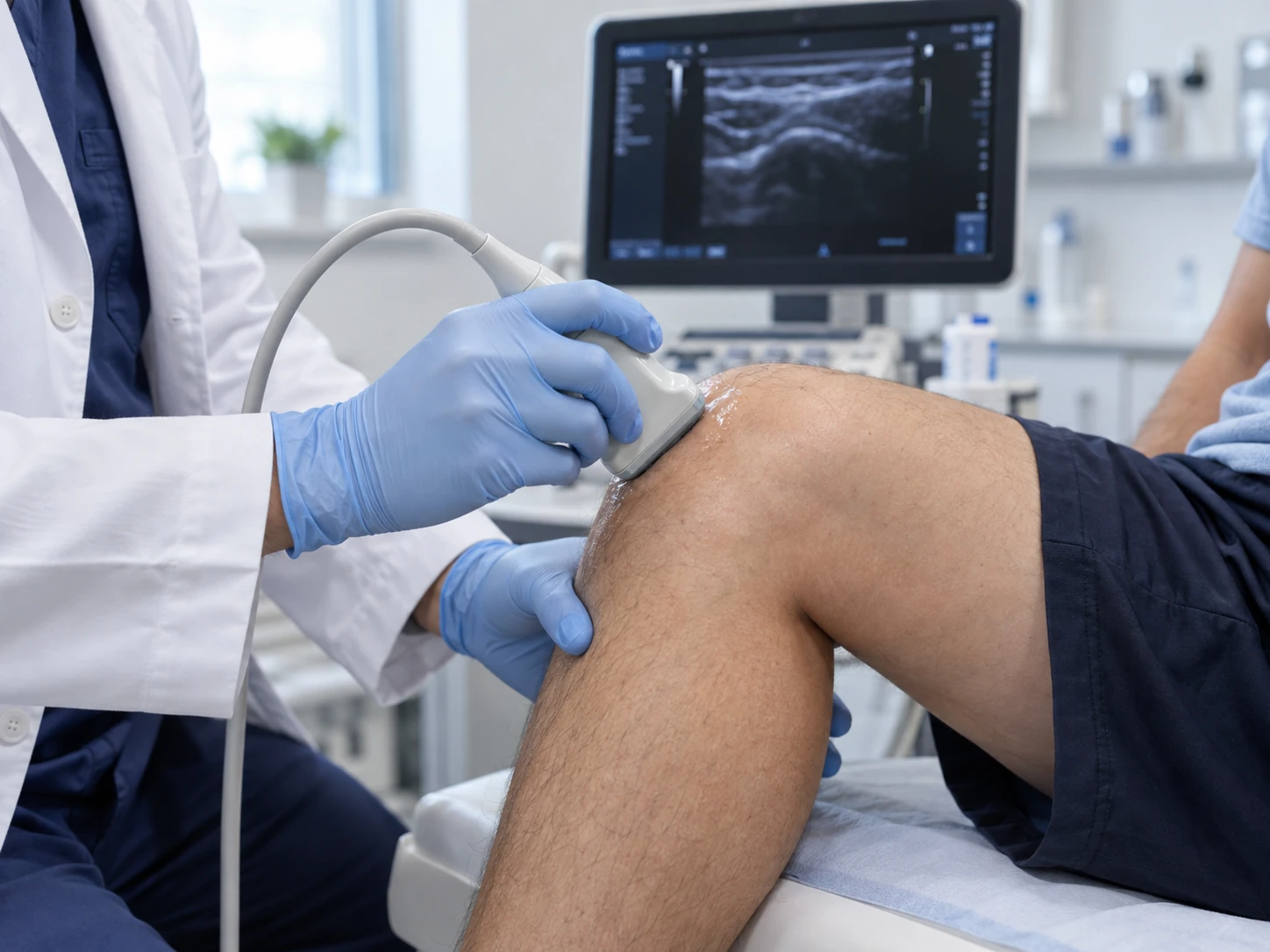
02 – PRECISE DIAGNOSIS
Identifying the actual source of pain
Doctors at certified clinics use a clinical examination and, where necessary, imaging or diagnostic blocks. The aim is to identify the cause of symptoms as accurately as possible and choose an appropriate approach.
Clinical examination
Ultrasound examination
X-ray examination
Magnetic resonance imaging (MRI)
Diagnostic blocks (where needed)
03 – MODERN TREATMENT OPTIONS
Individual treatment according to your needs
Following an examination, a doctor at a certified clinic may recommend a suitable combination of available procedures. The aim is to relieve pain and improve knee function; a slowing of disease progression cannot be guaranteed in general.
Arthrosamid® – a liquid endoprosthesis
PRP – platelet-rich plasma
BMAC – bone marrow
Hyaluronic acid
Supportive injection therapies – according to the indication and clinic availability
Interventional procedures – according to the indication

FEATURED THERAPY – Arthrosamid® – a liquid endoprosthesis
Arthrosamid® is a biocompatible hydrogel intended for symptomatic treatment of knee osteoarthritis. It is injected directly into the joint and may help relieve pain and improve knee function in appropriately selected patients. However, it cannot be guaranteed to replace or delay surgery.
Effectiveness, duration of relief and suitability for treatment vary between individuals.
04 – REHABILITATION AND A COMBINED APPROACH
More than an injection
Depending on the diagnosis, a combination of targeted treatment and individual rehabilitation may be appropriate at certified clinics. Physiotherapy and, where indicated, neurostimulation rehabilitation methods may support muscle strength, knee stability and movement function.
Individual physiotherapy
Neurostimulation rehabilitation
Improving muscle strength and stability
Return to everyday activities
05 – WHAT CAN YOU EXPECT?
The aim is less pain and more movement
Knee treatment is individual and its results may vary depending on the diagnosis, extent of changes and overall health. Many patients report:
Pain relief
Improved knee function
Better quality of life
Improved everyday functioning
06 – Frequently asked questions (FAQ)
What should you know about knee treatment?
Answers to common questions about knee treatment options. A doctor at your chosen certified clinic will explain whether a specific procedure is suitable.
01 Can knee osteoarthritis be treated without surgery?
Yes. In many patients, the symptoms of knee osteoarthritis can be treated without surgery. Options include physiotherapy, adjusting physical loading, medication, selected injection therapies and interventional procedures. The appropriate approach depends on the stage of disease, severity of symptoms and overall health. However, surgery may be the most suitable solution for advanced changes.
02 What is Arthrosamid® and who is it suitable for?
Arthrosamid® is an injectable biocompatible hydrogel intended for symptomatic treatment of knee osteoarthritis. It is injected directly into the knee joint and may help relieve pain and improve function in appropriately selected patients. A doctor determines suitability based on examination and the specific indication.
03 What is the difference between Arthrosamid®, PRP and BMAC?
These therapies differ in composition and mechanism of action. Arthrosamid® is a synthetic hydrogel for symptomatic treatment of knee osteoarthritis. PRP uses plasma prepared from the patient's own blood with a higher platelet concentration. BMAC is a concentrate prepared from the patient's bone marrow. Their suitability and level of clinical evidence differ according to the diagnosis and specific use.
04 How do I find out which treatment is most suitable for my knee?
A specialist examination is the foundation. A doctor assesses your symptoms, knee mobility and previous examination results, adding imaging where necessary. The doctor then proposes an individual treatment plan that may include one or more therapeutic methods.
05 Is injection therapy into the knee painful?
During injection, you may feel a brief prick, pressure or mild pain. Local anaesthesia and ultrasound guidance may be used depending on the procedure. Temporary tenderness or swelling may occur afterwards. The exact process depends on the therapy.
06 When can I expect improvement and how long will the effect last?
The onset and duration of the effect depend on the treatment chosen, diagnosis and individual response. For some therapies, improvement develops gradually over weeks. Relief may last for varying periods and cannot be guaranteed in advance. Your doctor will explain expectations for the particular procedure.
07 Can treatment help me delay knee replacement?
Non-surgical treatment may help some patients manage symptoms and improve everyday functioning. However, a particular injection therapy cannot generally be guaranteed to delay or replace surgery. Decisions about surgery depend on the clinical condition, functional limitations and the results of conservative treatment.
08 Is rehabilitation needed after injection?
Rehabilitation is often an important part of comprehensive knee treatment. Individual physiotherapy, muscle strengthening, movement training and, where indicated, modern neurostimulation rehabilitation methods may help improve knee function and stability. The specific rehabilitation plan depends on the diagnosis and procedure performed.
09 What are the risks and possible side effects of treatment?
Risks depend on the method. Temporary pain, swelling, redness or bruising may occur after an injection procedure. More rarely, serious complications may develop, including infection or an allergic reaction. Before the procedure, your doctor will explain the contraindications and possible risks of the chosen treatment.

Are you troubled by knee pain?
Find out which examination and treatment options may be considered for your symptoms.
A doctor at your chosen certified clinic will assess your health and propose an individual treatment plan where needed.