
WHERE DOES IT HURT?
Spine – facet joints
Spinal pain caused by facet joints
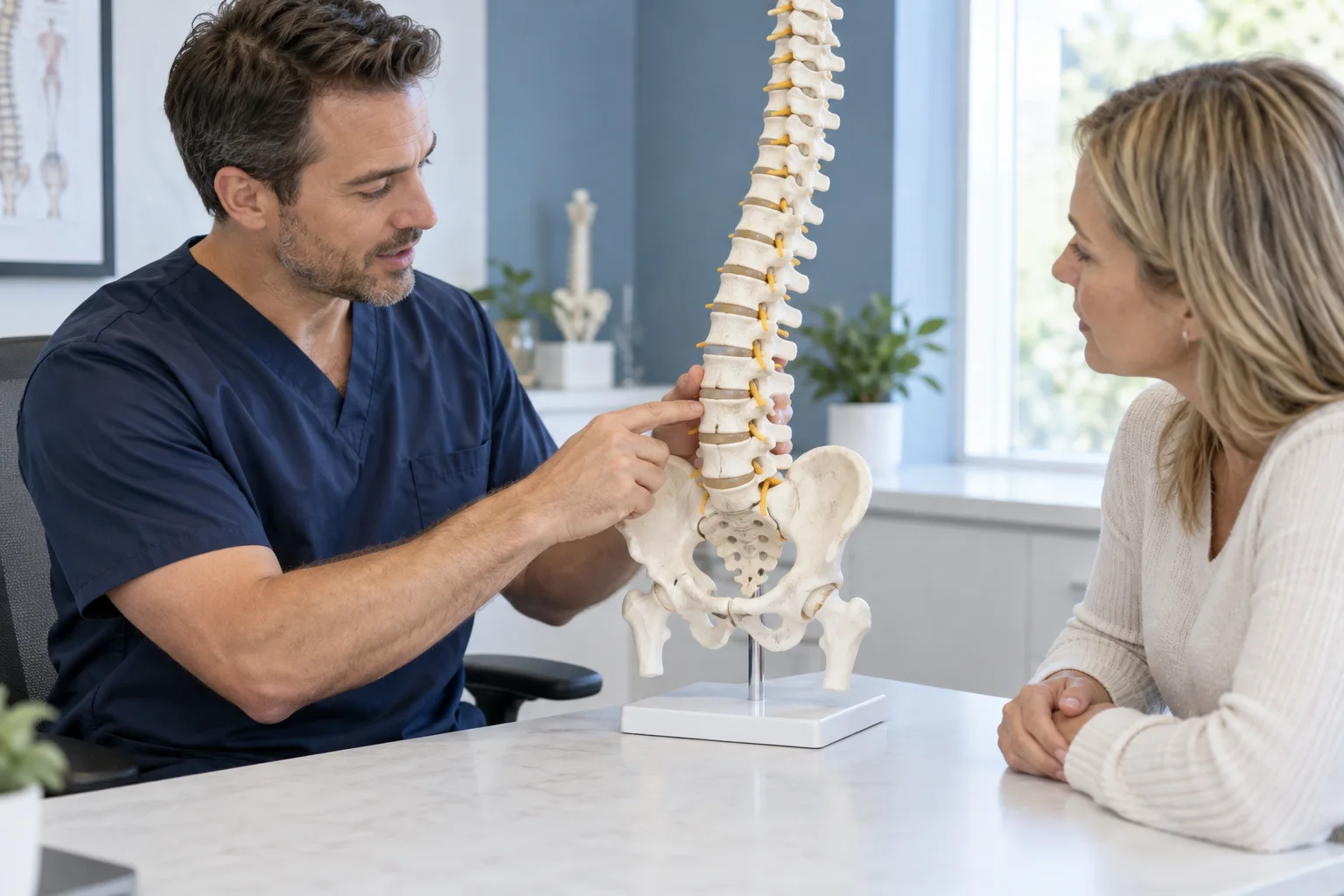
Facet (intervertebral) joints are small joints at the back of the spine. They help guide movement and stabilise the spine. Irritation or degenerative changes may contribute to lower back or neck pain. However, osteoarthritis seen on imaging does not in itself prove that these joints are the source of pain.
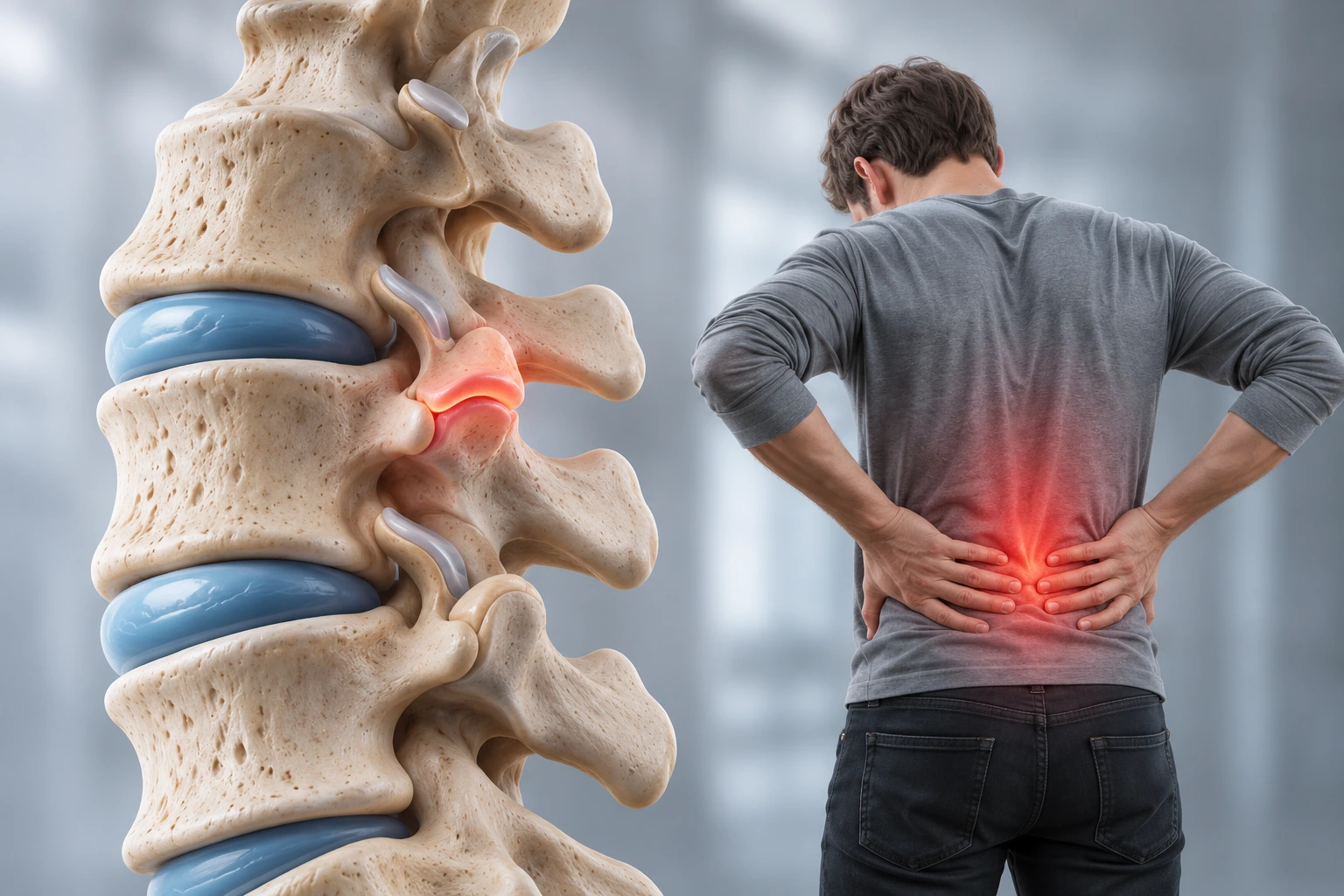
What are facet joints?
Each spinal motion segment has a pair of facet joints. Their surfaces are covered with cartilage and surrounded by a joint capsule. Gradual wear or overloading can lead to degenerative changes. These sometimes contribute to so-called facetogenic pain, but similar symptoms can have other causes.
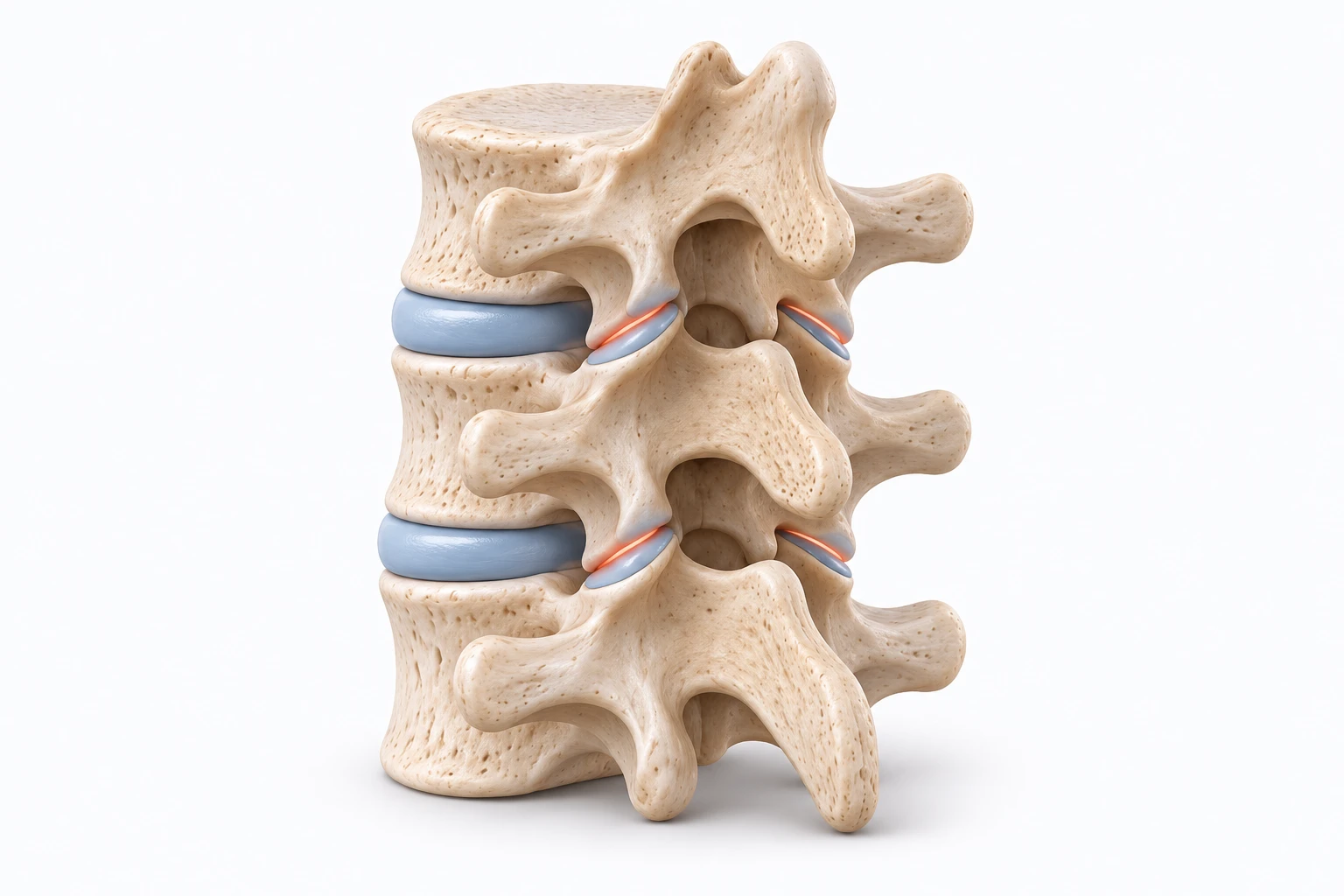
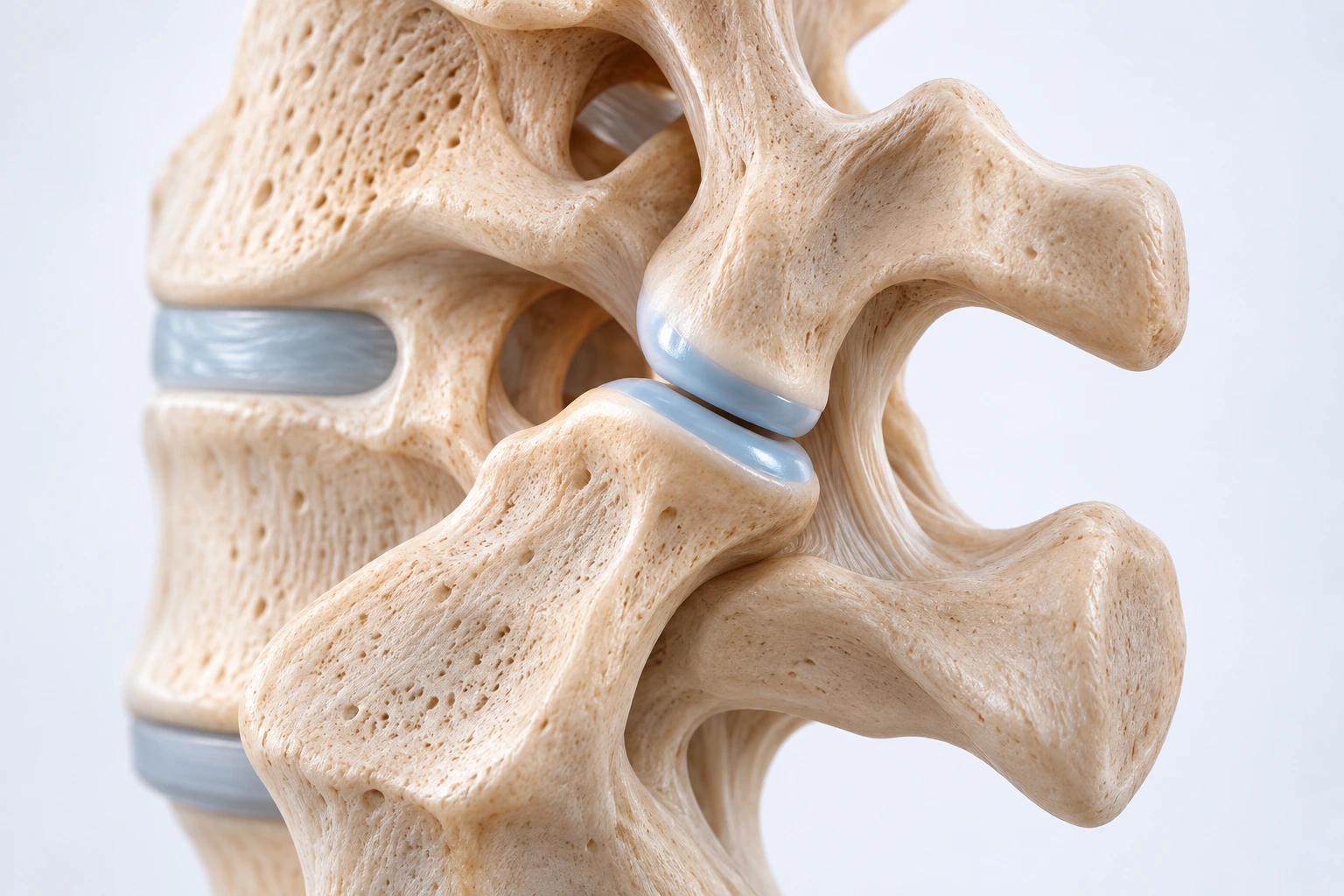
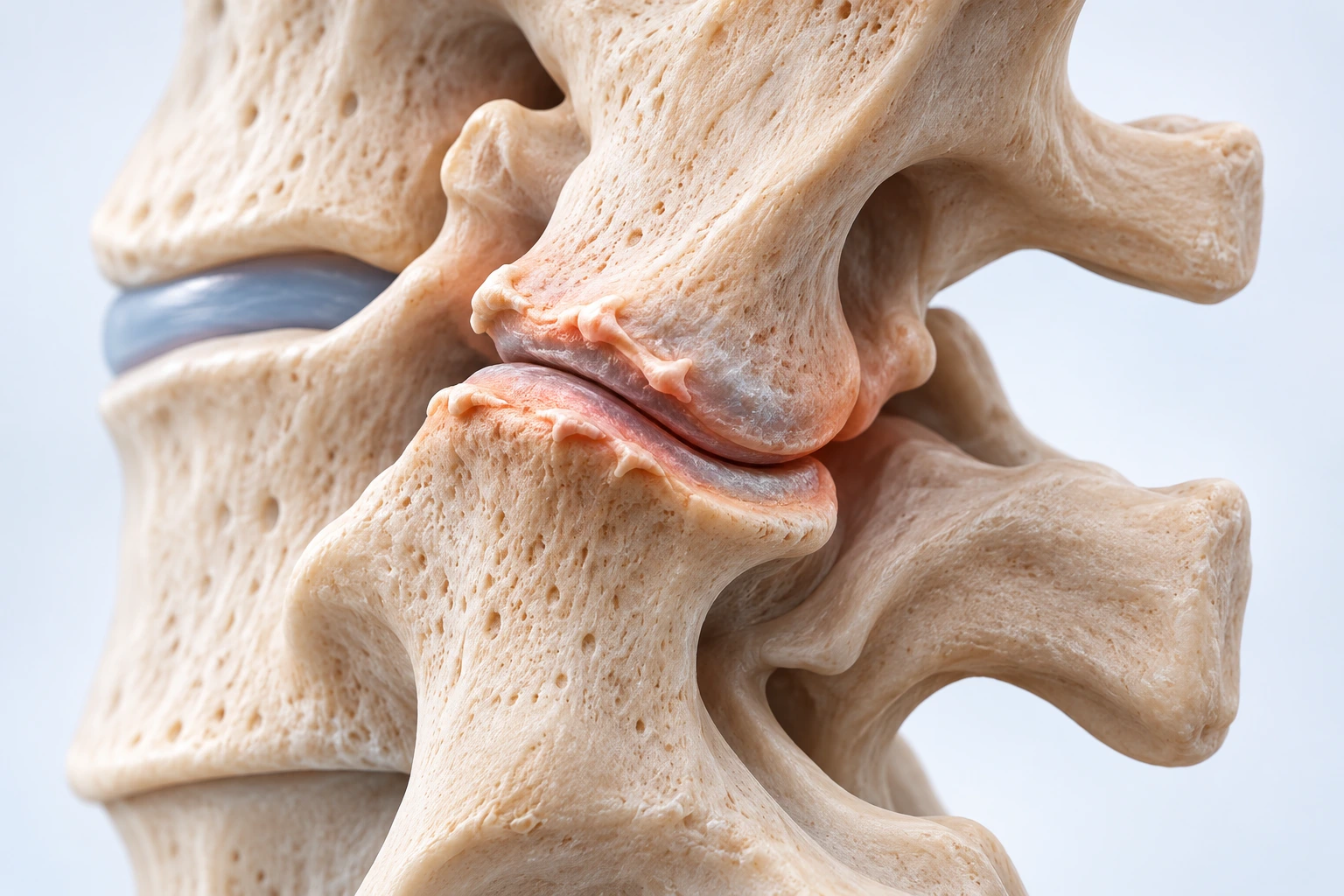
What symptoms can they cause?
Typical symptoms may include local lower back or neck pain, stiffness and worsening when bending backwards or rotating. Pain may be referred to the buttock or thigh, or to the shoulder, but it is usually not typical nerve-root pain with marked weakness or sensory changes. Symptoms alone cannot confirm that pain originates in the facet joints.
Rapidly worsening weakness, urinary problems or numbness around the groin require urgent medical assessment.
Diagnosis – how is the source of pain identified?
The doctor assesses the nature of the pain, functional limitations, neurological findings and imaging results. MRI or CT may reveal degenerative changes and exclude other causes, but cannot reliably confirm facetogenic pain on their own. When radiofrequency treatment is being considered, diagnostic blocks of the medial nerve branches supplying the facet joints may help.

Regenerative treatment options for facet joints
PRP – platelet-rich plasma
In chronic spinal pain where facet joints are considered the likely source, regenerative medicine is investigating the use of PRP (platelet-rich plasma). PRP is prepared from the patient’s own blood and contains platelets and biologically active components.
For selected patients, a doctor may consider PRP as a biological treatment option. Clinical evidence for facet joint pain is still limited, and PRP has not been shown to reliably restore damaged joint cartilage.
An individual and combined treatment approach
Depending on the symptoms and examination results, a combination of PRP with appropriate interventional pain procedures, physiotherapy and other supportive measures may be considered. The treating doctor determines the specific plan after assessing the diagnosis, risks and available evidence.
PRP is not a generally established standard treatment for facet joint pain; its use must comply with the relevant rules and specialist assessment.
Why choose an EIRM-certified clinic?
EIRM is a professional and certification institution. Certification applies to a specific workplace and a defined scope of procedures. Its aim is to support staff qualifications, standardised processes and safety. Certification does not guarantee a treatment outcome. Independent clinics provide diagnosis and care.
Frequently asked questions
How can I tell whether pain comes from a facet joint?
This requires specialist assessment; a diagnostic block can help in indicated cases.
Is PRP suitable for everyone?
No. A doctor decides on suitability after assessing the diagnosis, available evidence and risks.
How long does the effect of PRP last?
For facet joints, neither the effect nor its duration can be reliably predicted.
Can surgery be avoided?
Most isolated facet joint pain is managed without surgery; the specific diagnosis is decisive.
Are you troubled by persistent lower back or neck pain?
Choose a certified clinic and book a specialist consultation.