Regenerative medicine
Regenerative medicine in musculoskeletal pain treatment: how does it work and what can it actually do today?
Modern biological procedures use the body's natural mechanisms. What are their possibilities and limitations, and for which symptoms may they have a role?
Pain in joints, the spine, tendons and tendon attachments can limit movement, work and everyday activities over the long term. Regenerative medicine studies and uses biological procedures intended to influence the environment of damaged tissues and support natural healing processes. However, it is not a universal solution, and the effectiveness of methods differs by diagnosis.
What is regenerative medicine?
In musculoskeletal treatment, regenerative medicine includes various approaches using biological materials, often obtained from the patient's own body. Examples include platelet-rich plasma (PRP) and bone marrow aspirate concentrate (BMAC). Their biological effects are studied particularly in relation to regulating the inflammatory environment and healing processes. Clinical benefit cannot be inferred from laboratory results alone – it must be confirmed by high-quality studies for the specific diagnosis.
How do damaged tissues heal naturally?
After injury or overload, immune cells, signalling molecules and tissue repair mechanisms are activated. Inflammation is a natural part of this response, but repeated damage or some chronic conditions may lead to persistent pain and functional limitations. Long-term pain does not necessarily mean ongoing inflammation: its causes are often combined and require thorough diagnosis.
What can regenerative medicine do – and what should not be expected from it?
In appropriately selected patients, some procedures may help relieve pain and improve function. The effect may develop gradually, and results are individual. However, these procedures have not been shown generally to restore worn cartilage, create new intervertebral discs or replace surgery. Relief also cannot be promised to every patient. The specific diagnosis, available evidence, health and realistic treatment goals are decisive.
What role do stem cells play?
The term “stem cells” includes different cell populations. Some bone marrow preparations contain small numbers of cells with stromal or progenitor properties, but their presence alone does not demonstrate tissue restoration after administration. PRP is not considered a stem cell therapy. Terms such as “stem cell treatment” must therefore be used precisely and without exaggerated expectations.
PRP: platelet-rich plasma
PRP (Platelet-Rich Plasma) is prepared by processing blood collected from the patient, usually by centrifugation. Platelets contain growth factors and other signalling substances involved in healing processes. PRP is studied and used for selected joint, tendon and tendon attachment conditions. Some studies may show symptomatic improvement, particularly in knee osteoarthritis, but results depend on the indication, preparation and protocol. Benefit has not been sufficiently demonstrated for every condition.
BMAC: bone marrow aspirate concentrate
BMAC (Bone Marrow Aspirate Concentrate) is obtained from bone marrow aspirate, most commonly collected from the pelvic bone, which is then processed and concentrated. It contains a mixture of cells and bioactive components. Its use is being investigated for selected musculoskeletal conditions, including joint and spinal problems. Evidence of effectiveness remains limited or inconsistent for many indications; BMAC cannot be claimed to reliably regenerate an intervertebral disc or cartilage.
Arthrosamid®: a different approach to knee osteoarthritis pain
Arthrosamid® is an injectable, non-degradable polyacrylamide hydrogel intended for symptomatic treatment of knee osteoarthritis. It is not an autologous biological preparation, hyaluronic acid or a cell-based regenerative therapy. Its aim is to relieve symptoms in appropriately indicated patients; it does not restore damaged cartilage. A doctor determines suitability and risks according to the clinical findings and current product information.
Why are precise diagnosis and image-guided injection important?
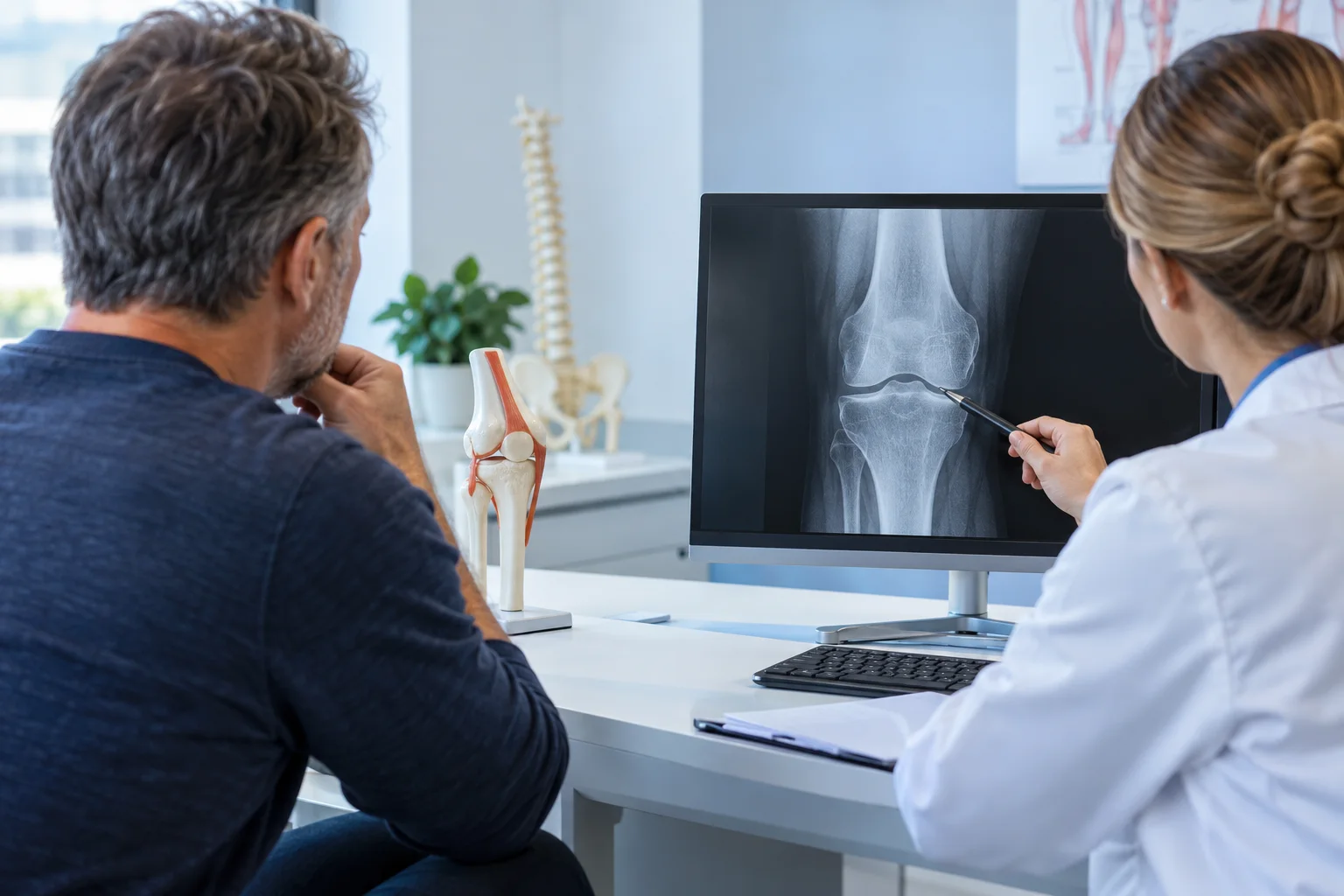
Before choosing treatment, the source of pain needs to be identified, taking into account the clinical examination and, where appropriate, ultrasound, X-ray or MRI. For some procedures, ultrasound or X-ray guidance enables more precise placement of the material administered. Precision is important but does not itself guarantee the effectiveness of therapy.
A comprehensive approach remains the foundation
Biological and injection procedures may be just one part of an individual treatment plan. Appropriate physical activity, physiotherapy, adjustments in loading, treatment of coexisting conditions and other conservative or interventional methods where needed all have a role. Patients should understand the possible benefits, limitations, alternatives and risks of the proposed procedure.
Treatment at EIRM-certified clinics
Treatment takes place at clinics that meet international professional and quality standards and have obtained EIRM certification. EIRM acts as a professional and certification institution; healthcare itself is provided by independent certified clinics. Availability and suitability of individual methods must be checked with the specific clinic.