Regenerative medicine | approximately 5-minute read
Autologous plasma (PRP): modern treatment options for joint and tendon pain
Pain in the shoulder, knee, elbow or tendons can significantly limit everyday movement. One option doctors may consider for selected diagnoses is the injection of autologous platelet-rich plasma (PRP). What does this method involve, how is it performed and what can be expected?
What is autologous plasma (PRP)?
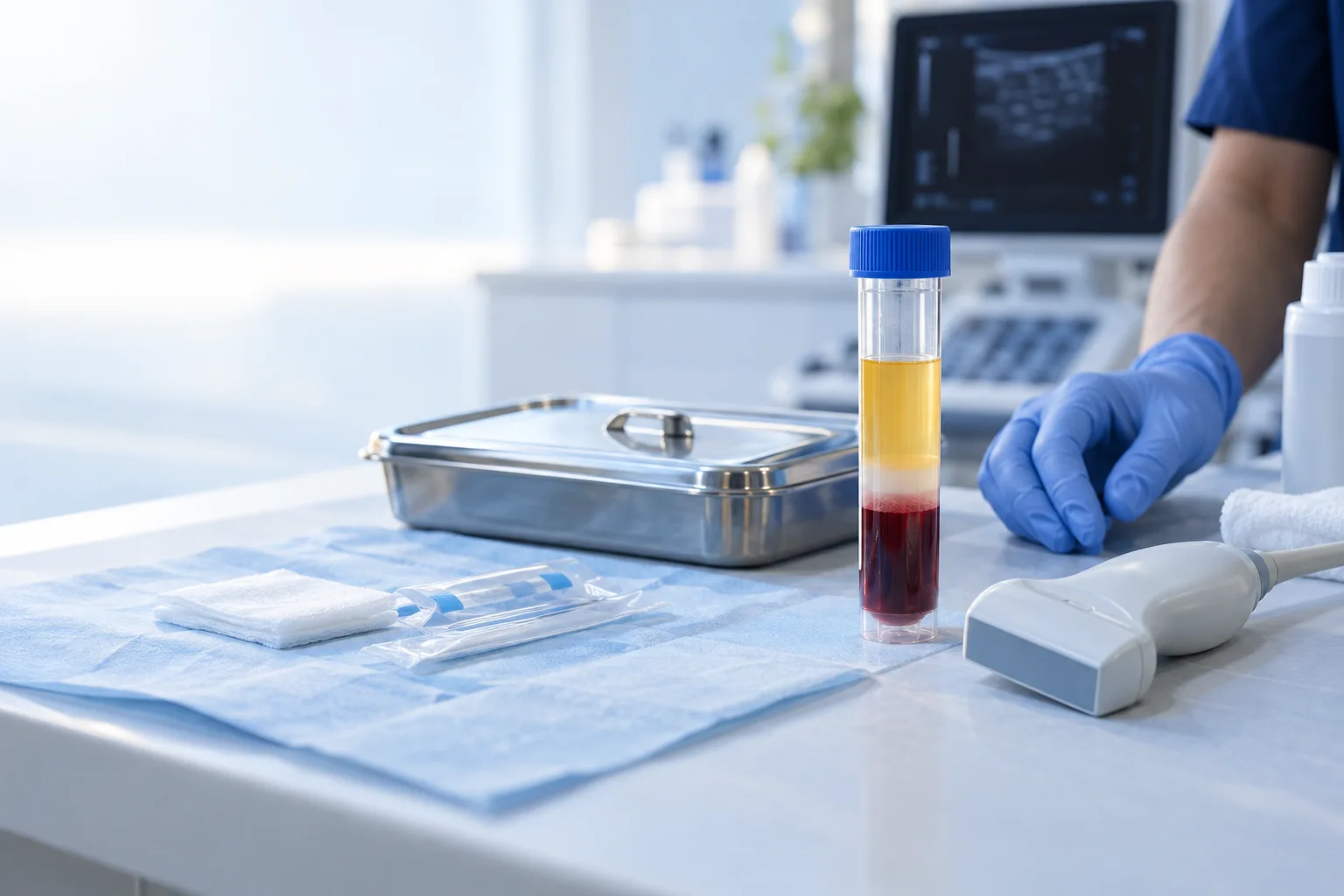
PRP (platelet-rich plasma) is a preparation obtained from the patient's own blood. Blood is collected into a special system and processed by centrifugation to obtain plasma with a higher proportion of platelets. These contain growth factors and other biologically active substances involved in natural healing processes.
After targeted injection, PRP may influence the local biological environment. However, this does not mean it will restore damaged cartilage or a tendon in every patient. Clinical benefit depends on the diagnosis, severity of the condition, preparation used and individual factors.
For which symptoms is PRP used?
In clinical practice, PRP is considered mainly for selected painful musculoskeletal conditions:
Some forms of knee osteoarthritis, where it may help relieve pain and improve function in some patients.
Selected chronic tendon attachment problems, such as tennis elbow.
Some tendon conditions and overload injuries, depending on their type and location.
Particularly careful assessment is needed for shoulder, hip or back pain; evidence for PRP effectiveness is not equally convincing for all indications.
PRP is not a universal replacement for rehabilitation, medication or surgery. A doctor should determine its place in the treatment plan after an examination and consideration of the available evidence.
How does PRP work?
Platelets release substances involved in communication between cells and healing processes. It is thought that their concentrated administration may influence inflammatory and repair mechanisms in some conditions. However, clinical study results vary, and effectiveness has not been clearly demonstrated for every diagnosis.
How is PRP administered?
1. Examination and indication
A doctor assesses the cause of pain, previous treatment, health and possible contraindications.
2. Blood collection
A small amount of the patient's venous blood is collected.
3. Processing
The blood is processed in a centrifugation system according to the chosen protocol.
4. Targeted injection
The prepared plasma is administered into the designated area. Ultrasound or other imaging guidance may be used depending on the location.
This is usually an outpatient procedure. Its duration varies by clinic and procedure. Temporary pain, tenderness or swelling may occur after injection; the treating doctor determines the subsequent regimen and return to loading. Because the procedure involves an injection, infection, bleeding or other complications cannot be completely ruled out.
How many injections are needed?
There is no universal number of injections suitable for all patients. The number, intervals and PRP preparation method depend on the diagnosis, chosen protocol and doctor's recommendation. It is therefore inappropriate to recommend three injections automatically to everyone.
What results can be expected?
In some appropriately selected patients, PRP may lead to gradual pain relief and improved function. Any effect is usually assessed over weeks to months. However, some patients do not experience significant improvement. PRP does not guarantee tissue regeneration or eliminate the need for further treatment.
Physiotherapy, appropriate physical activity and addressing the cause of symptoms remain important parts of care.
Specialist assessment at certified clinics
The European & Scandinavian Institute of Regenerative Medicine (EIRM) is a professional and certification institution that does not itself provide healthcare. Treatment takes place at clinics that meet international professional and quality standards and have obtained EIRM certification. The relevant healthcare clinic always assesses suitability for PRP and availability of the specific procedure individually.
If you have long-term joint or tendon pain, choose from the list of certified clinics and enquire about specialist consultation options. Availability of a specific method may differ between clinics.